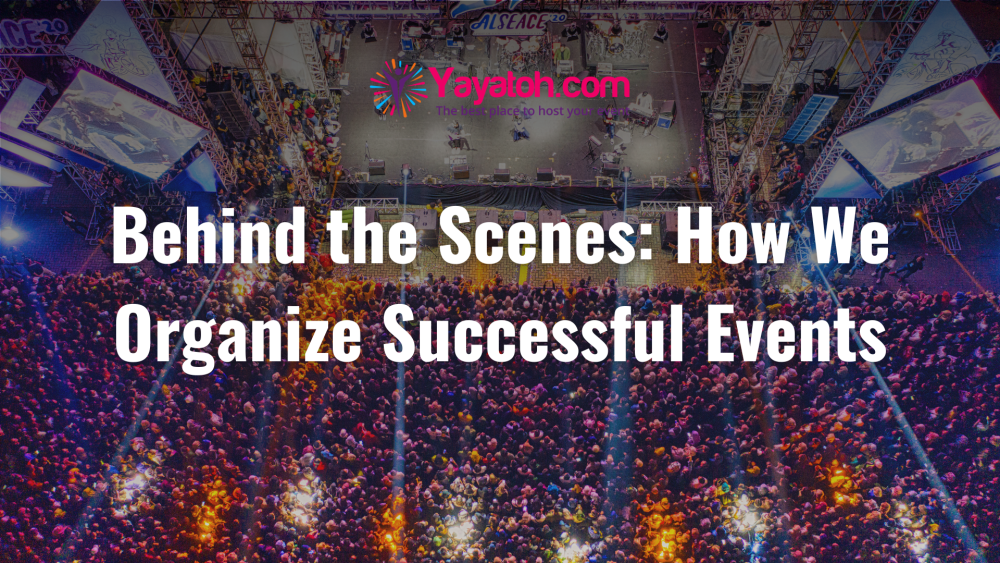
When people attend a great event, they usually only see the final product—beautiful lighting, smooth stage transitions, energized crowds, and flawless timing. What they don’t see is the complex ecosystem working behind the curtain: the planning meetings, vendor negotiations, scheduling conflicts, contingency planning, and last-minute problem-solving that make everything appear effortless.
Successful events are not accidental. They are carefully engineered experiences built through structure, creativity, and coordination.
In this expanded behind-the-scenes guide, we’ll break down exactly how professional event organizers create successful events from start to finish—and why modern planners are increasingly turning to platforms like Yayatoh, a powerful all-in-one event management system designed to simplify complex workflows.
1. It All Begins With Purpose: Defining the Event Vision
Every great event starts with a clear purpose.
Before any budget is set or venue is booked, planners ask critical questions:
- What is the goal of the event?
- Who is the target audience?
- What action or feeling should attendees leave with?
- Is this event meant to educate, celebrate, sell, or connect people?
This stage is often called the event discovery phase, and it sets the tone for everything that follows.
For example:
- A corporate conference focuses on learning and networking
- A product launch focuses on excitement and brand storytelling
- A wedding focuses on emotional experience and personalization
Without a strong vision, even a well-funded event can feel disconnected or confusing.
2. Strategic Planning: Turning Ideas Into a Blueprint
Once the vision is clear, planners move into strategic design.
This includes:
- Event format (in-person, hybrid, virtual)
- Estimated guest count
- Venue requirements
- Technical needs (sound, lighting, streaming)
- Timeline structure
At this stage, professionals create a master event blueprint, which acts as the foundation for all departments.
Modern organizers increasingly use digital platforms like Yayatoh to centralize planning documents, reduce miscommunication, and ensure every stakeholder works from the same updated plan.
3. Budget Engineering: Where Every Dollar Has a Job
Budgeting is one of the most important behind-the-scenes responsibilities in event management.
A professional event budget is broken into categories such as:
- Venue rental and setup
- Catering and beverages
- Production (sound, lighting, staging)
- Marketing and promotions
- Staffing and security
- Technology and software
- Emergency contingency fund
What separates amateurs from professionals is not how much they spend—but how strategically they allocate funds.
A well-managed budget ensures:
- No overspending surprises
- Better return on investment (ROI)
- Smarter vendor negotiation
- Clear financial accountability
With tools like Yayatoh, organizers can track expenses in real time and adjust budgets dynamically as the event evolves.
4. Vendor Selection and Relationship Management
No event succeeds alone. Vendors are the backbone of execution.
These include:
- Caterers
- Audio-visual teams
- Decorators and designers
- Transportation providers
- Security teams
- Photographers and videographers
Choosing the right vendors is about more than price—it’s about reliability, communication, and experience.
Event planners often build long-term vendor relationships to ensure consistency and trust across multiple events.
Platforms like Yayatoh simplify vendor coordination by keeping contracts, schedules, and communication in one centralized system.
5. Designing the Guest Journey (The Invisible Experience Layer)
One of the most important yet invisible parts of event planning is guest experience design.
This includes mapping out:
- Arrival and check-in process
- Registration flow
- Seating arrangements
- Breakout sessions or networking zones
- Food and beverage access points
- Exit experience
The goal is to eliminate friction and make everything feel natural.
A great event feels effortless because every guest movement has been pre-designed.
Even small details like:
- Queue flow
- Signage placement
- Lighting direction
- Background music transitions
…are carefully engineered to shape emotional experience.
6. Technical Production: The Engine Behind the Event
Technology is the backbone of modern events.
This includes:
- Sound systems and microphones
- Lighting design and control
- LED screens and visuals
- Live streaming infrastructure
- Stage automation
Technical failure is one of the biggest risks in event execution.
That’s why professional teams run multiple testing cycles before the event begins.
With platforms like Yayatoh, organizers can coordinate technical schedules, assign responsibilities, and ensure all systems are tested and approved before showtime.
7. Marketing and Promotion: Filling the Room
Even the best event is a failure if no one shows up.
Event marketing includes:
- Social media campaigns
- Email marketing sequences
- Paid advertising (Google, Meta, LinkedIn)
- Influencer partnerships
- Landing page optimization
- Early-bird promotions
Successful event marketing relies on timing and audience targeting.
Modern organizers use data-driven strategies to understand:
- When audiences are most active
- Which channels convert best
- What messaging drives registrations
With integrated tools like Yayatoh, organizers can align registration tracking with promotional efforts for better conversion insights.
8. Risk Management and Contingency Planning
Behind every smooth event is a strong backup plan.
Professionals prepare for:
- Weather disruptions
- Speaker cancellations
- Technical failures
- Low attendance scenarios
- Emergency evacuations
A well-prepared event team always has:
- Backup equipment
- Secondary vendors
- Flexible schedules
- Emergency communication protocols
The goal is simple: solve problems before attendees even notice them.
9. Rehearsals: The Final Layer of Confidence
Rehearsals are where everything comes together.
This stage includes:
- Full run-through of the program
- Speaker and host practice sessions
- AV testing under real conditions
- Timing adjustments
- Emergency drills
This is where small issues become visible and get fixed before they become real problems.
Experienced organizers know that rehearsals are not optional—they are essential.
10. Event Day Execution: Controlled Chaos Behind the Curtain
On event day, everything happens at once:
- Teams arrive early for setup
- Vendors coordinate deliveries
- Registration opens
- Speakers are briefed
- Technical systems go live
- Staff manage guest flow
To attendees, everything looks smooth and effortless.
Behind the scenes, it is fast-paced coordination where timing, communication, and leadership determine success.
This is where centralized platforms like Yayatoh become extremely valuable—allowing teams to communicate instantly, adjust schedules, and manage operations in real time.
11. Post-Event Analysis: Where Real Growth Happens
The event doesn’t end when the audience leaves.
Post-event work includes:
- Collecting attendee feedback
- Analyzing registration and attendance data
- Measuring engagement and ROI
- Reviewing vendor performance
- Documenting lessons learned
This stage is often overlooked, but it is critical for long-term improvement.
Successful organizers treat every event as a learning opportunity to make the next one better.
12. The Future of Event Management: Why Platforms Like Yayatoh Matter
The event industry is rapidly evolving.
Manual spreadsheets, scattered emails, and disconnected tools are no longer efficient for modern event demands.
This is why organizers are shifting toward unified platforms like Yayatoh, which help:
- Centralize event planning in one system
- Improve team communication
- Track budgets and timelines
- Manage vendors efficiently
- Enhance guest experience execution
In a competitive event landscape, efficiency is no longer optional—it’s the key to success.
Final Thoughts
Behind every successful event is a carefully orchestrated system of planning, creativity, logistics, and teamwork.
What looks simple to attendees is actually the result of weeks or months of preparation, coordination, and precision execution.
As events continue to grow in scale and complexity, tools like Yayatoh are becoming essential for modern organizers who want to deliver flawless, memorable experiences without the chaos.
Great events don’t just happen—they are built, step by step, behind the scenes.